
Polish cities have added more than 1,200 km of new cycling infrastructure between 2019 and 2024. The growth is uneven — Warsaw leads by a significant margin, with Kraków and Wrocław not far behind, while several mid-sized cities still rely on shared pavement sections that require constant negotiation between cyclists and pedestrians. This overview covers what riders can realistically expect on the main corridors, how the surfaces hold up across seasons, and where the gaps remain.
Warsaw: The Vistula Spine and District Connectors
Warsaw's most coherent cycling axis runs along both banks of the Vistula river. The western bank path stretches from Bielany in the north to Wilanów in the south — approximately 22 km of separated asphalt that stays rideable even in early spring when many side streets are still soft from frost heave. The eastern bank is shorter but connects Praga Południe to the Siekierki waterfront with minimal traffic crossings.
The issue for daily commuters is moving east–west. Cross-city connections depend on which district you need to reach. Mokotów and Żoliborz have reasonably complete painted lanes on major arterials, but Targówek and parts of Białołęka still fragment the network into blocks that require cyclists to merge with tram and bus lanes at intersections. The city's cycling coordinator publishes an annual infrastructure audit; the 2024 edition flagged 34 intersections where lane continuity breaks without signage.
Practical notes for Warsaw riders
- The Vistula west bank path closes temporarily each spring (usually mid-March to mid-April) for resurfacing near the Łazienkowski Bridge approach — plan alternates via ul. Czerniakowska.
- Veturilo, Warsaw's public bike system, operates 380+ stations from April through November. Single-ride access is available without a subscription for trips under 20 minutes.
- The Wisłostrada underpass at Most Śląsko-Dąbrowski is unlit between October and March — a rear light is not optional on this stretch.
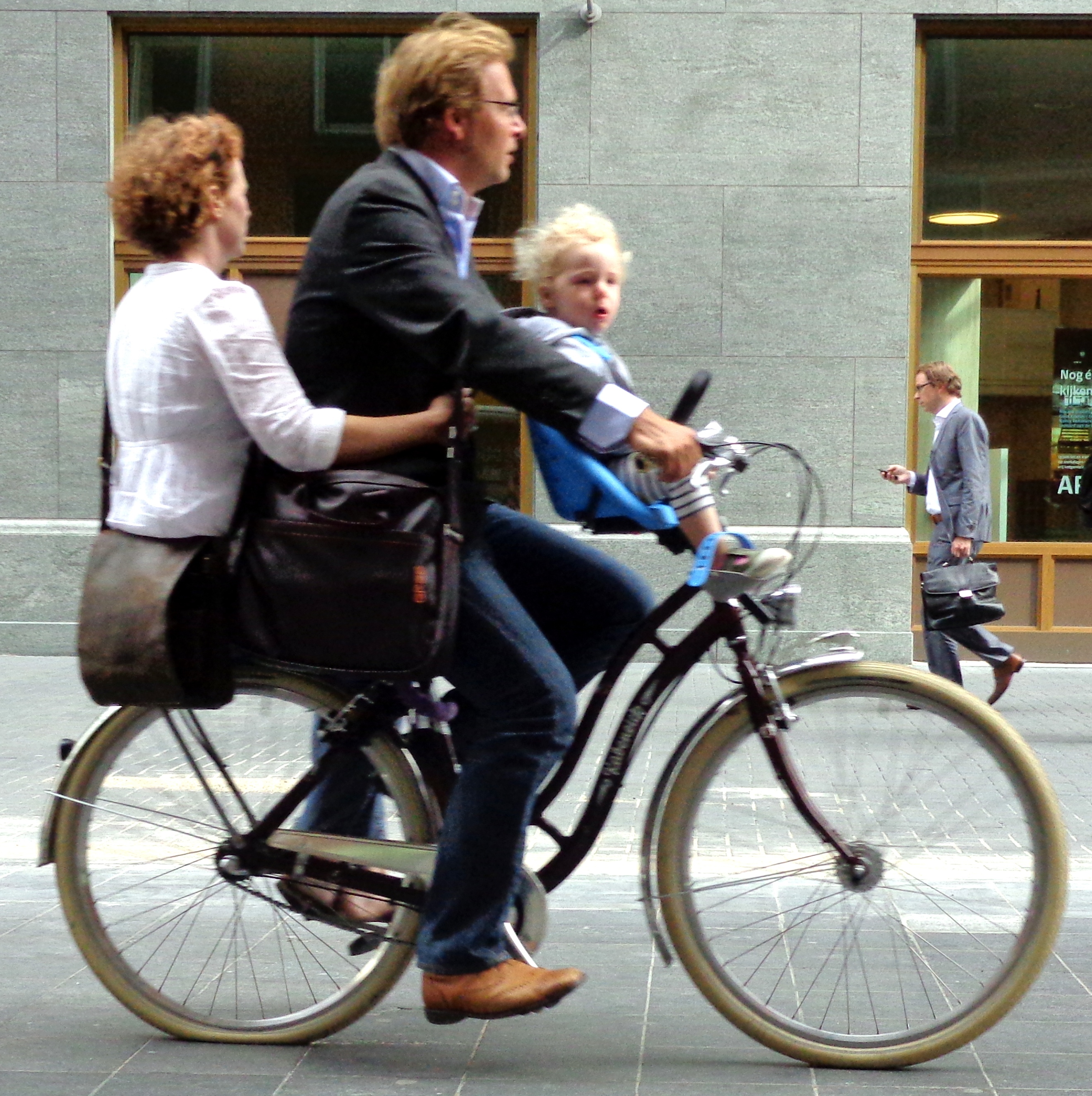
Urban cycling requires reading infrastructure quality before committing to a route. Photo: Wikimedia Commons / CC BY-SA
Kraków: The Old Town Problem
Kraków's cycling network works well outside the historic core. The Błonia meadow loop, the Planty perimeter path around the old city walls, and the routes along the Wisła and Rudawa rivers are genuinely usable for commuting. The challenge is that much of the city's employment concentration sits inside or adjacent to a zone where cycling lanes either disappear into pedestrian priority areas or merge onto cobbled surfaces that make aluminium-frame bikes uncomfortable and carbon frames a liability.
The Kazimierz district has received the most attention recently. Ul. Dietla was remodelled in 2022 with a protected lane replacing parking on the south side — the first significant departure from the paint-only approach that dominated Kraków's cycling investments through the previous decade. Cyclists heading from Podgórze to the centre now have a mostly uninterrupted path across the river, though the transition at Most Powstańców Śląskich still requires merging briefly into a marked but unprotected lane.
Route options from the south
- Łagiewniki to Kazimierz: Follow ul. Zakopiańska to the Wisła path, then east along the river. Approximately 7 km, mostly separated surface. Usable in all weather except ice.
- Nowa Huta to Rynek Główny: The direct route through Czyżyny and Grzegórzki uses a mix of lanes and shared roads. Allow 35–40 minutes at a steady pace.
- The Velo Małopolska long-distance network passes through Kraków and is clearly signed at major junctions — useful for finding the main arteries if you are unfamiliar with the city.
Gdańsk: Coastal and Port District Routes
Gdańsk benefits from a relatively flat topography and a long history of cycling investment tied to its port district planning. The tri-city cycle path (Trójmiejska Trasa Rowerowa) connecting Gdańsk, Sopot, and Gdynia is one of the longest continuous urban cycling routes in Poland at approximately 38 km. It runs mostly through parks and green corridors, avoiding heavy traffic for long stretches.
Within Gdańsk itself, the Old Town perimeter and the routes through Wrzeszcz and Oliwa function well during summer. The port district around Młode Miasto is undergoing significant construction through 2027, and several marked routes have been temporarily diverted — check the Zarząd Dróg i Zieleni Gdańsk website for current detour maps before committing to that corridor.
What the Maps Don't Show
Municipal cycling maps reflect completed infrastructure, not current condition. A lane marked on a 2023 city plan may have been repurposed as a construction access road, partially removed for utility works, or simply not maintained after winter frost cycles lifted the tarmac. The most reliable approach is to cross-reference official maps with OpenStreetMap's cycling layer, which is updated by local contributors who ride the routes and note surface quality, temporary obstructions, and directional restrictions.
Three things that maps consistently fail to capture: the angle at which painted lanes cross tram tracks (angles below 45 degrees increase fall risk significantly), the condition of road markings on wet surfaces (many Polish cities repaint lanes infrequently, leaving worn markings that are invisible after rain), and the actual width of lanes where parked delivery vehicles encroach from the adjacent road lane.
Inter-City Cycling: The EuroVelo 9 Corridor
For those interested in longer distances, EuroVelo 9 passes through Poland on a north–south axis, connecting the Baltic coast to the Adriatic. The Polish section runs from Gdańsk through Warsaw and Kraków toward the Czech and Slovak borders. Signage is inconsistent — some stretches through rural Mazovia and Małopolska rely entirely on GPS navigation because physical route markers are absent or removed.
The most detailed resource for planning on this corridor remains the official EuroVelo 9 route page, which includes downloadable GPX files. For Polish-specific details, the Rowery.org.pl community forum contains substantial route notes from riders who cover these sections regularly.
Infrastructure Ratings by City (2024 Overview)
The following reflects general impressions from publicly available cycling audits and rider-sourced quality reports, not an independent assessment by this publication.
- Warsaw: Network density improving, significant gaps in east–west connections, Vistula corridor excellent.
- Wrocław: Strong investment in recent years; the Odra island routes are well-maintained and largely conflict-free.
- Kraków: Good along rivers, problematic near the historic core; surface quality variable after winter.
- Gdańsk: Coastal and park routes outstanding; port district disrupted by ongoing construction.
- Poznań: Grid-based city with reasonable lane coverage in the centre; outer districts underserved.